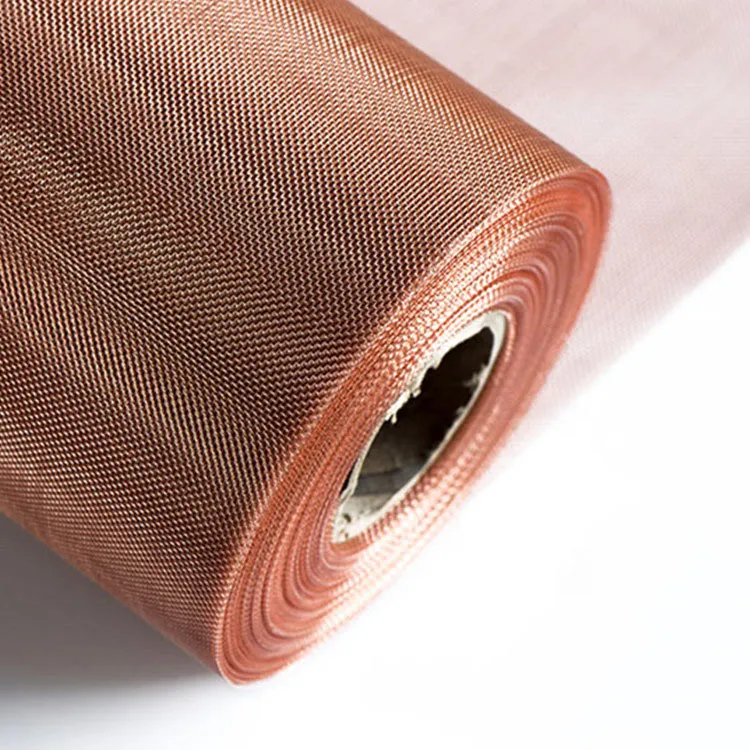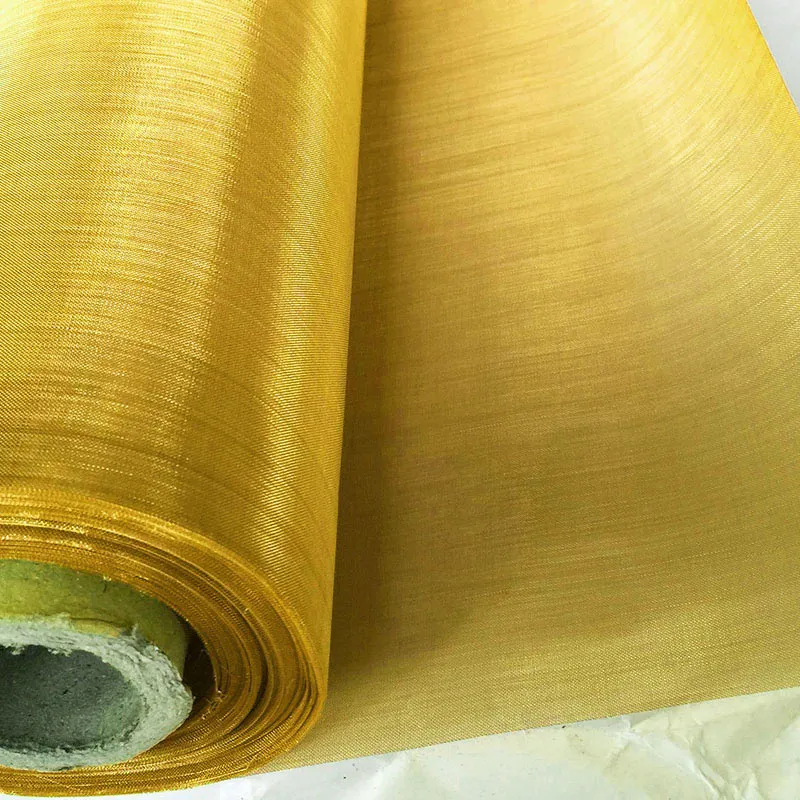
Industrial Composite Mesh from a Leading woven wire mesh supplier
Finding a high-performance filtration or structural mesh requires more than just selecting a material; it demands a precise combination of weaving patterns and structural reinforcement. For industrial applications in petrochemicals, pharmaceuticals, and water treatment, the stability of the mesh under pressure determines the operational efficiency of the entire system. Standard single-layer meshes often struggle with deformation or insufficient load-bearing capacity in high-stress environments.
Our composite spot-welded woven wire solutions address these challenges by fusing multiple layers of specialized mesh through precision welding. By combining different weave types—such as plain, twill, or dutch weaves—into a single integrated structure, we provide a product that maintains the inherent flexibility of woven wire while gaining the rigidity of a welded framework. This approach allows for gradient filtration and enhanced mechanical strength, making it an essential component for machinery and metallurgy sectors seeking reliability and precision.

Engineering the Composite Structure: The Synergy of Weaving and Spot Welding
The production of our composite mesh involves a sophisticated multi-stage process where multiple layers of woven mesh are meticulously stacked and connected via spot welding. Unlike traditional meshes, this method allows for a customized internal architecture. Each layer can be configured with different wire diameters and mesh sizes, providing a tailored response to the specific physical demands of the application.
The spot welding process is critical to the integrity of the final product. Our technical standards ensure that solder joints are firm and reliable, capable of withstanding significant tensile and shear forces without detachment. To maintain structural consistency, we focus on three primary quality markers:
- Uniformity: Consistent joint size and spacing ensure that force is distributed evenly across the entire surface, preventing local weak points.
- Surface Integrity: Solder joints are finished to be smooth and free of pores, slag inclusions, or cracks, which is vital for maintaining corrosion resistance.
- Dimensional Accuracy: Strict adherence to length, width, and mesh size specifications ensures a seamless fit into existing industrial housings.
This hybrid construction retains the permeability and filtration characteristics of a weave while introducing the stiffness required for structural support, effectively bridging the gap between a flexible screen and a rigid grate.

Material Excellence and Mechanical Performance Standards
The performance of any industrial mesh is fundamentally tied to its material composition. We prioritize high-grade metal wires that meet stringent standards for strength, toughness, and chemical resistance. For environments exposed to corrosive agents, stainless steel is utilized, with nickel and chromium proportions strictly monitored to meet corresponding grade standards, ensuring long-term durability in harsh chemical or aquatic settings.
Beyond the chemistry of the metal, the physical condition of the wire is paramount. Our quality control protocols mandate that the wire surface be smooth and devoid of scratches, rust, or oil stains. This ensures that the spot welding process creates a clean, high-strength bond and that the overall appearance of the mesh remains professional and contamination-free.
In terms of overall performance, the composite mesh is engineered for high flatness. By eliminating warping and deformation, the mesh fits precisely against contact surfaces, reducing the risk of bypass leakage in filtration systems. Furthermore, the multi-layered stiffness allows the mesh to act as a reinforcing agent, providing the necessary strength to withstand external pressures, such as those encountered during concrete pouring in construction applications.
Industrial Applications and the Logic of Gradient Filtration
The most significant advantage of our multi-layer welded mesh is the ability to implement "Gradient Filtration." In this configuration, we stack mesh layers with decreasing aperture sizes—moving from coarse to fine. This process intercepts particles of various sizes sequentially, which prevents the surface of the fine mesh from clogging prematurely and significantly improves the overall filtration efficiency and accuracy.
This capability is particularly valuable in the following sectors:
- Petrochemical and Chemical: Effective removal of impurities from viscous fluids and gases while maintaining high flow rates.
- Water Treatment: Multi-stage particle capture to protect downstream membranes and sensitive equipment.
- Pharmaceuticals: Precision screening for powders and liquids where purity and zero-leakage are mandatory.
- Machinery and Metallurgy: Providing high-strength protective screens that can withstand impact and high-pressure loads.
By combining coarse outer layers for primary protection and strength with fine inner layers for precise filtration, we create a multifunctional component that solves complex operational challenges within a single, compact structure.
Technical Specification and Selection Matrix
| Application Scenario | Recommended Weave | Layer Configuration | Primary Performance Goal |
|---|---|---|---|
| Fine Liquid Filtration | Dutch Weave | Multi-layer Gradient | High Accuracy / Low Leakage |
| Structural Reinforcement | Plain Weave | Heavy-gauge Dual Layer | High Tensile Strength |
| Industrial Screening | Twill Weave | Single-layer Welded | Abrasion Resistance |
| Chemical Processing | Plain Weave | Stainless Steel Composite | Corrosion Resistance |
| Water Purification | Plain Weave | Graduated Mesh Sizes | Anti-Clogging Efficiency |
Evaluating Supplier Capabilities for Specialized Wire Mesh
When procuring complex composite meshes, buyers must look beyond basic pricing and focus on the technical capabilities of the manufacturer. The ability to precisely control spot-welding parameters is what separates a reliable industrial component from one that fails under pressure. A professional woven wire mesh supplier must demonstrate a commitment to scientific management and strict quality control to ensure that every batch is consistent.
Key evaluation factors include the availability of advanced testing equipment to verify solder joint strength and the capability to customize the mesh architecture. Since every industrial environment is different, the ability to combine different materials and weaving methods into one composite structure is a critical competitive advantage. This customization ensures that the final product is optimized for the specific shear forces and chemical exposures of the client's facility.
Furthermore, experience in international markets—spanning from the United States to Germany and Australia—indicates a supplier's ability to meet diverse global standards and logistical requirements, ensuring that the product arrives on time and performs as specified in the engineering drawings.
Future Trends in Metal Filtration and Mesh Engineering
The trajectory of the metal mesh industry is moving toward higher specialization and the integration of "smart" materials. We are seeing an increased demand for meshes that can handle extreme temperature fluctuations and highly aggressive chemical environments without losing structural integrity. This is driving the adoption of more advanced alloys and more precise welding techniques that minimize the heat-affected zone around solder joints.
Another emerging trend is the shift toward integrated filtration modules. Instead of providing a simple roll of mesh, manufacturers are now designing complete filter elements that incorporate the composite mesh as a core, surrounded by custom frames and seals. This reduces installation errors and ensures a perfect seal, which is critical for high-pressure petrochemical applications.
For procurement managers, the focus is shifting from "lowest cost per meter" to "lowest total cost of ownership." This means investing in higher-quality composite structures that offer longer service lives and lower maintenance intervals, thereby reducing the downtime of critical industrial machinery.
Technical FAQ and Procurement Guidance
What is the primary difference between a standard woven mesh and a spot-welded composite mesh?
A standard woven mesh is flexible and consists of a single layer of interlaced wires. A spot-welded composite mesh consists of multiple woven layers fused together at specific points. This creates a structure that retains the filtration properties of a weave but adds significantly higher strength, stiffness, and resistance to deformation.
How does gradient filtration work in multi-layer meshes?
Gradient filtration uses layers of different mesh sizes stacked from coarsest to finest. The coarse layers capture larger particles first, preventing the finest layer from becoming blinded or clogged too quickly. This increases the overall lifespan of the filter and improves filtration efficiency.
Can different materials be combined in a single composite mesh?
Yes, the spot-welding process allows for the combination of mesh sheets made from different materials or weaving methods. For example, a coarse outer layer can be designed for mechanical protection while an inner layer is designed for precise filtration, meeting complex operational requirements.
What should I check to ensure the quality of the weld joints?
You should inspect for uniformity in joint size and shape, ensure there are no visible pores, cracks, or slag inclusions on the surface, and verify that the joints do not detach when subjected to specified tensile or shear forces.
Which weave type is best for high-pressure filtration?
Dutch weave is often preferred for high-precision and high-pressure filtration due to its denser structure. However, for general strength and durability, a plain weave combined in a multi-layer composite structure is highly effective.
How do I choose the right wire diameter for my application?
Selection depends on the balance between flow rate and strength. Thicker wires provide more stability and load-bearing capacity but reduce the open area for filtration. We recommend providing your specific pressure and particle size requirements to determine the optimal combination.
Industry Technical References
- ASTM International Standards for Metal Wire Mesh
- ISO Quality Management Systems for Manufacturing
- Research on Multi-layer Filtration Mechanisms
- NIST Materials Science and Engineering Data
Selecting the right composite mesh is a critical decision that impacts the longevity and efficiency of your industrial equipment. By integrating professional weaving with precision spot welding, we provide solutions that withstand the most demanding environments in the global manufacturing sector.
Related Industrial Mesh Solutions