
THE BUYER'S GUIDE / SELECTION
Choosing Nickel Plain Weave Wire Mesh: Opening Size, Wire Diameter and Application
This guide helps procurement teams and engineers select the right plain weave wire mesh in nickel by explaining the relationship between mesh count, wire diameter, and opening size, and by matching those parameters to application requirements such as corrosion resistance, high-temperature filtration, battery manufacturing, and electrochemical use. All specifications are drawn from confirmed product data for Anping County Ansheng Wire Meshes Product Co., Ltd.

Process environment compatibility: Select nickel plain weave wire mesh when the operating medium involves acids, alkalis, salts, or elevated temperatures that would cause corrosion or strength loss in carbon steel or standard alloys. Nickel's chemical stability and high-temperature resistance make it the appropriate material for these conditions, as documented in confirmed product specifications covering chemical processing, petroleum refining, chlor-alkali, and related industries.
Filtration particle size and aperture match: The mesh count and wire diameter together determine the opening size. Confirm the required aperture for the target particle retention or passage before selecting a specification. The nickel plain weave mesh range covers 1 to 600 mesh with wire diameters from 0.02 mm to 8 mm; coarse screening uses lower mesh counts with heavier wire, while fine-to-ultrafine filtration uses higher mesh counts (200–400+ mesh) with wire diameters as fine as 0.028–0.05 mm. Always verify the exact opening size calculation for the chosen mesh-and-wire-diameter pairing.
Electrochemical, battery, and shielding requirements: For electrode materials in battery manufacturing, catalyst carriers in hydrogen production by water electrolysis, or electromagnetic shielding in electronics, pure nickel grades (N6, Nickel 200, N4) are required. The plain weave structure provides the flat, continuous surface and dimensional stability needed for these functions. Mesh count selection within these applications should be guided by required conductivity continuity, surface area, or shielding effectiveness targets specific to each design.
What Is Plain Weave Wire Mesh?
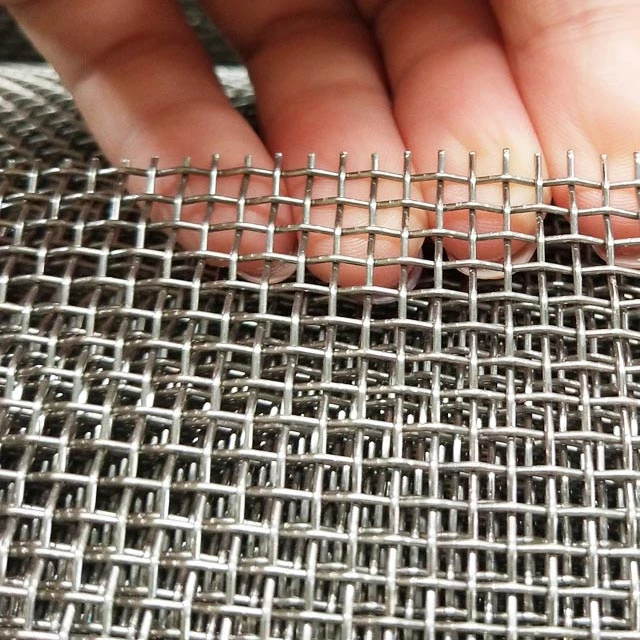
Plain weave wire mesh is woven by passing each weft wire alternately over and under each successive warp wire, creating the simplest and most uniform interlocking pattern available in woven wire cloth. This one-over-one-under structure produces a flat, stable surface with equal mesh openings in all directions. The result is consistent filtration accuracy, uniform force distribution, and predictable dimensional stability under load — characteristics that make plain weave wire mesh a practical baseline choice across many industrial screening and filtration applications.
When that weave pattern is produced from pure nickel wire, the product also inherits the material's chemical stability, high-temperature resilience, and compatibility with electrochemical environments.
Why Nickel? Key Material Properties
Nickel has good chemical stability and can resist corrosion from various corrosive media such as acids, alkalis, and salts, allowing it to maintain stable performance in harsh chemical environments and achieve a long service life. It also has excellent high-temperature resistance, maintaining good strength and stability in high-temperature environments without deforming or melting. In chemical reactions, pure nickel woven wire mesh is not prone to chemical reactions with other substances, so it can serve as a stable structural material or carrier, ensuring the safety of the production process and the stability of product quality.
These combined properties make nickel plain weave wire mesh suitable where carbon steel or standard stainless steel alloys would corrode, contaminate the process, or lose structural integrity.
Understanding the Key Specification Parameters
Before selecting a plain weave wire mesh in nickel, buyers need to understand three interdependent parameters. Getting any one of them wrong can affect filtration accuracy, flow rate, and service life.
1. Mesh Count
Mesh count (or mesh number) refers to the number of openings per linear inch. A higher mesh number means more, smaller openings; a lower mesh number means fewer, larger openings. The nickel plain weave wire mesh available from Anping County Ansheng Wire Meshes Product Co., Ltd. spans a mesh range of 1 to 600 mesh, covering coarse industrial screening at the low end and fine precision filtration at the high end.
2. Wire Diameter
Wire diameter is the thickness of each individual nickel wire used in weaving. In a plain weave, the wire diameter directly controls the size of the opening between wires. A thicker wire for the same mesh count reduces the opening; a thinner wire enlarges it. The available wire diameter range for nickel plain weave mesh is 0.02 mm to 8 mm.
The table below lists commonly stocked specification pairings:
| Mesh | Wire Diameter (mm) |
|---|---|
| 10 | 0.50 |
| 20 | 0.35 |
| 35 | 0.18 |
| 40 | 0.15 / 0.16 / 0.18 |
| 50 | 0.15 |
| 60 | 0.12 |
| 60 | 0.15 |
| 80 | 0.10 |
| 100 | 0.095 |
| 100 | 0.07 |
| 120 | 0.07 |
| 140 | 0.07 |
| 140 | 0.05 |
| 180 | 0.05 |
| 200 | 0.05 |
| 300 | 0.03 |
| 400 | 0.028 |
Specifications outside this table can be customized upon request.
3. Opening Size (Aperture)
The actual clear opening between wires — the aperture — is what physically determines which particle sizes are retained or passed. Opening size is a function of both mesh count and wire diameter; two sheets with the same mesh count but different wire diameters will have different apertures. When specifying a nickel plain weave wire mesh for a filtration task, confirm the required aperture, then verify that the chosen mesh-and-wire-diameter combination achieves it.
Structural Advantages of the Plain Weave Pattern
Compared with twill or dutch weave options, the plain weave structure offers specific mechanical and filtration characteristics that make it the preferred choice in several scenarios:
- Dimensional stability under pressure. The over-under pattern is the most compact interlocking geometry available. When filtering high-pressure fluids, the plain weave mesh can better maintain its shape and is less prone to deformation than looser weave structures.
- Uniform force distribution. Force is distributed evenly across all wire intersections, with no local weak points. This means the mesh can uniformly withstand tensile and compressive forces from different directions.
- Filtration accuracy. Uniform, regular opening shapes allow precise control of the filtration particle size, enabling effective interception of small particles. This supports use in industries that require extremely high filtration accuracy, such as precision liquid filtration.
- Flat, smooth surface. The even surface allows materials to flow across the mesh without residue accumulation, simplifying cleaning and extending service life.
Selection Criteria: Matching Parameters to Application
Criterion 1 — Corrosive or High-Temperature Process Conditions
If the operating environment involves acids, alkalis, salts, or elevated temperatures where conventional steel would corrode or lose strength, nickel is the appropriate material choice. Plain weave wire mesh in nickel maintains stable performance under these conditions. Relevant industries documented in confirmed product materials include chemical processing, petroleum refining, the alkali production industry, chlor-alkali chemical industry, and organic chloride production.
For moderate corrosion requirements where nickel's full chemical resistance is not necessary, stainless steel plain weave wire mesh (grades 304, 316, 316L) provides an alternative at a different cost profile and is available in mesh counts from 1 to 635 mesh.
Criterion 2 — Required Filtration Particle Size
The mesh count and wire diameter must match the target particle size for retention or passage:
- Coarse screening (10–50 mesh): Larger openings suitable for removing visible solid particles or coarse debris from liquids and gases. Wire diameters in this range run from 0.15 mm to 0.50 mm in the standard nickel plain weave offerings.
- Medium filtration (60–180 mesh): Appropriate for separating smaller solid particles, impurities, and contaminants in chemical and petroleum process streams. Wire diameters range from 0.05 mm to 0.15 mm.
- Fine to ultrafine filtration (200–400 mesh and above, up to 600 mesh with customization): Suited to high-precision applications including electronics-industry liquid filtration and catalyst carrier screening. Wire diameters at 200 mesh and above are 0.028 mm to 0.05 mm in standard stock.
Always confirm the exact opening size calculation for the selected mesh-and-wire-diameter combination before finalizing an order.
Criterion 3 — Electrochemical and Battery Manufacturing Requirements
Nickel plain weave wire mesh can be used as an electrode material for batteries, providing current conduction and carrying electrochemical reactions, as well as improving cycle life and charge-discharge performance. It is also used as a catalyst carrier for catalytic reactions, particularly in hydrogen production by electrolysis of water, where electrode performance stability is critical. For these applications, material purity matters: the materials are N6, Nickel 200, and N4 — all high-purity nickel grades.
Criterion 4 — Electromagnetic Shielding and Electronics
In the electronics field, nickel plain weave wire mesh is used for electromagnetic shielding, anti-static and thermal management in electronic products, and can also serve as a substrate for electric heating elements. For shielding applications, the required shielding effectiveness will drive the mesh count and wire diameter selection; finer meshes with higher nickel content provide greater conductivity continuity across the cloth surface.
Criterion 5 — Sheet Dimensions and Customization
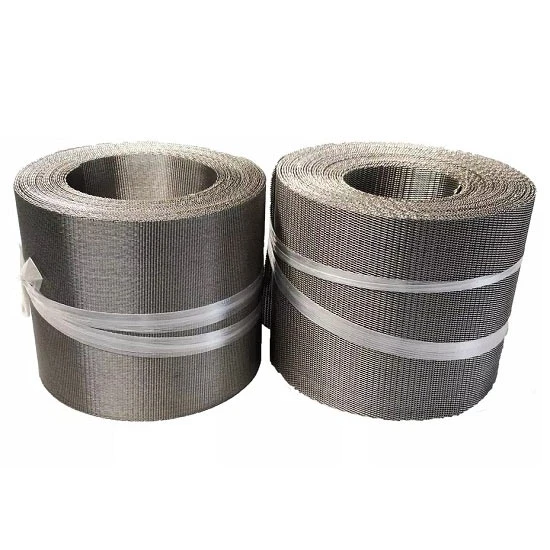
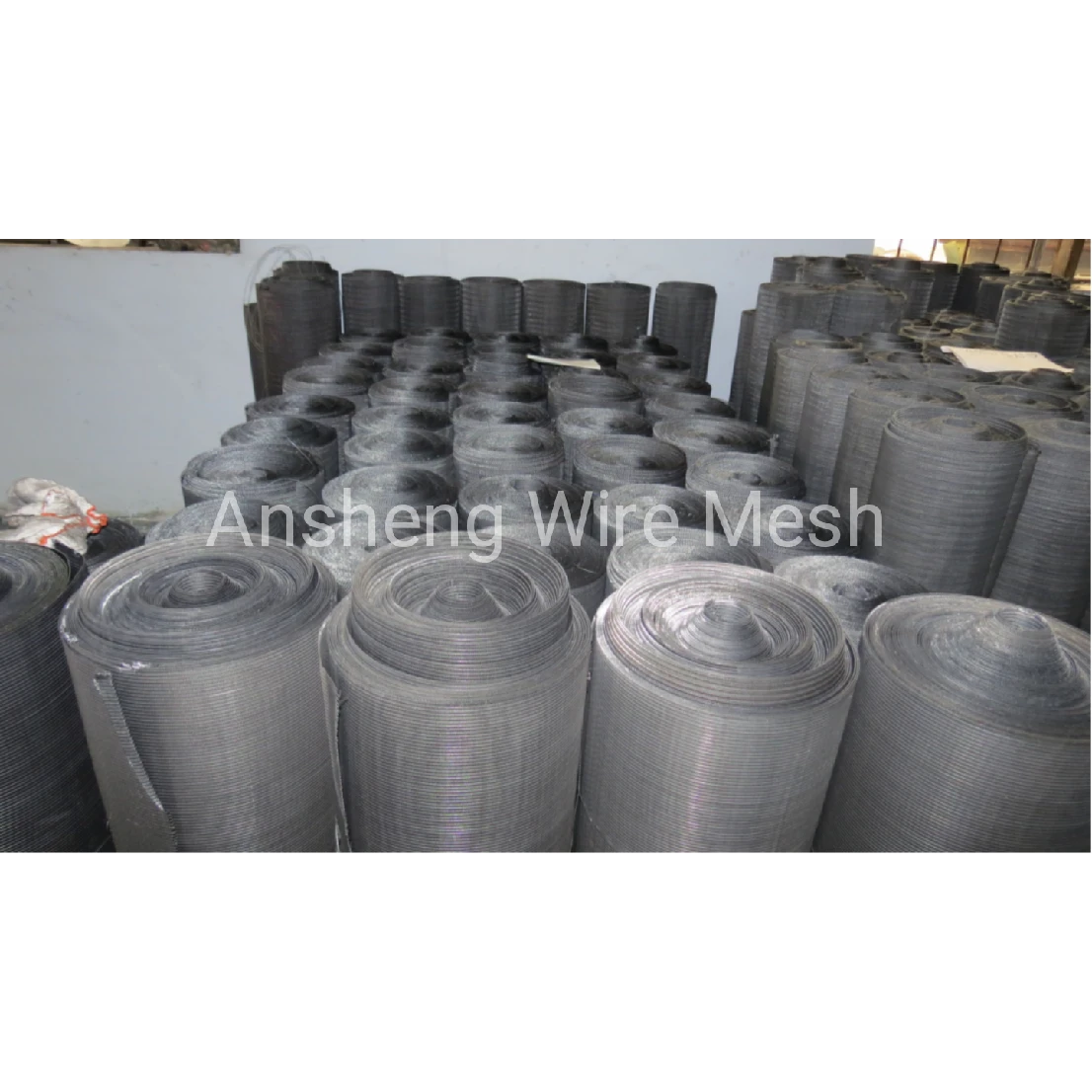
Standard sheet width is 1 to 2 meters; standard roll length is 30 meters. Custom widths and lengths up to a maximum of 350 meters are available upon request. When large-format or non-standard dimensions are required, confirm the feasibility of the specific size with the supplier before committing to a specification.
Plain Weave vs. Twill Weave in Nickel: When Each Applies
Both plain weave and twill weave are offered in nickel wire mesh. The appropriate choice depends on the operating conditions:
| Factor | Plain Weave | Twill Weave |
|---|---|---|
| Opening uniformity | Highly uniform — suited to precise filtration | Slightly less uniform but allows thicker wire |
| Wire diameter at same mesh | Thinner | Thicker possible |
| Structural stability | Most compact, resists deformation | Greater tensile and impact resistance |
| Typical use case | Precision filtration, electrochemical applications | High wear, high load-bearing scenarios |
If the application involves high wear resistance and load-bearing capacity, or requires thicker wires within the same mesh count, the twill weave variant may be more appropriate. If precise filtration accuracy and dimensional stability are the primary requirements, plain weave is the standard choice.
Applicable Products from Anping County Ansheng Wire Meshes Product Co., Ltd.
The product directly addressed in this guide is the Nickel Plain Weave Wire Mesh offered by Anping County Ansheng Wire Meshes Product Co., Ltd. It is available in N6, Nickel 200, and N4 material grades, with mesh counts from 1 to 600, wire diameters from 0.02 mm to 8 mm, and customizable sheet dimensions.
For reference, two related products may be considered depending on requirements:
- Nickel Twill Weave Wire Mesh — same nickel material grades and dimensional ranges, but the twill weave structure suits applications requiring higher tensile and impact resistance.
- Stainless Steel Plain Weave Wire Mesh — available in 304, 316, and 316L grades for applications where full nickel chemical resistance is not required but the plain weave structural advantages remain relevant.
Summary: Selection Checklist
Before placing an order for nickel plain weave wire mesh, confirm the following:
- Operating environment — Does the medium involve acids, alkalis, salts, or high temperatures that require nickel's specific chemical and thermal resistance?
- Required opening size — What particle size must be retained or passed? Calculate the aperture from the mesh count and wire diameter combination.
- Application type — Filtration, electrochemical electrode, catalyst carrier, electromagnetic shielding, or structural component? Each has different mesh count and wire diameter priorities.
- Material grade — N6, Nickel 200, or N4: confirm the purity requirement for the specific process or electrochemical environment.
- Sheet dimensions — Will standard 1–2 m width and 30 m roll length suffice, or is customization required?
- Weave type — Is dimensional stability and precise filtration the priority (plain weave), or is load-bearing and wear resistance more critical (twill weave)?
Anping County Ansheng Wire Meshes Product Co., Ltd. stocks a wide range of standard specifications and offers customization for mesh counts, wire diameters, and sheet dimensions outside the standard ranges.
THE PEOPLE

About the author
THE COMPANY
Anping County Ansheng Wire Meshes Product Co., Ltd.
Anping County Ansheng Wire Meshes Product Co., Ltd. was founded in 1996 and is located in Anping County, which is known as the "Hometown of Wire Mesh". Our company is an enterprise specializing in the production and sale of various metal wire mesh and filter equipment. The products are widely used in machinery, petrochemical, plastic, metallurgy, pharmaceutical, water treatment and other industries. Our company has advanced production and testing equipment, strict scientific management and quality control.…
About Us ↗Visit company website ↗YOUR NEXT STEP
Bring your brief. Start a useful conversation.
Use case, specification, quantity and delivery window: make the next conversation specific.
Post time: Oct . 28, 2026 01:49