
THE BUYER'S GUIDE / SELECTION
Choosing Red Copper Wire Mesh: Opening Size, Wire Diameter and Application
Red copper wire mesh is a woven screen made from pure copper wire (grades T1, T2 or T3) and is valued for its high conductivity, corrosion resistance and electromagnetic shielding capability. This guide helps buyers identify the right mesh count, wire diameter and weave type for their specific application — whether electronics shielding, chemical filtration, architectural grounding, aerospace components or laboratory use — based on confirmed product specifications from Anping County Ansheng Wire Meshes Product Co., Ltd.

Mesh count (opening size): The confirmed range for red copper wire mesh is 2–200 mesh. Coarser counts suit architectural, grounding and rough-screening uses; finer counts (up to 200 mesh) are required for precision filtration, laboratory screening and electromagnetic shielding applications. Mesh count must always be specified together with wire diameter because the actual opening size depends on both parameters.
Wire diameter: The confirmed range is 0.08 mm to 0.8 mm. Thinner wire maximises open area and reduces flow resistance; thicker wire increases tensile strength and durability. For applications involving mechanical stress, vibration or repeated cleaning, a larger wire diameter is appropriate. For high-precision filtration or fine EM shielding, thinner wire combined with a higher mesh count is the correct approach.
Weave pattern: Plain weave provides maximum interlock and rigidity and is suitable for general filtration, shielding layers and architectural grounding. Twill weave allows finer openings for a given wire diameter and is preferred for high-mesh chemical filtration and precision screening.
Material grade and surface quality: Grades T1, T2 and T3 represent pure copper. Buyers should confirm the characteristic uniform purple-red colour, smooth surface free of burrs or pores, and a mesh edge-length error within ±0.02 mm where dimensional precision is critical.
Application environment: Red copper wire mesh is appropriate for atmospheric, fresh-water and sea-water environments due to copper's confirmed corrosion resistance. Chemical compatibility must be independently verified for specific process fluids. The material is non-magnetic and provides electromagnetic shielding, making it suitable for electronics, aerospace and cable applications.
What Is Red Copper Wire Mesh?
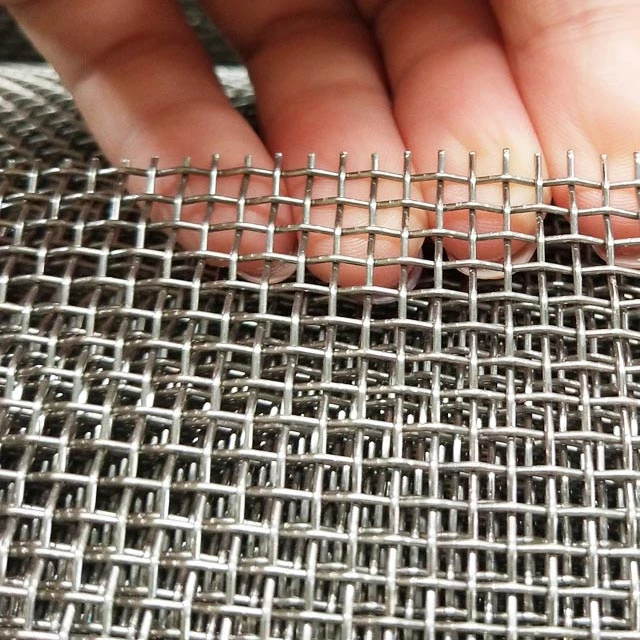
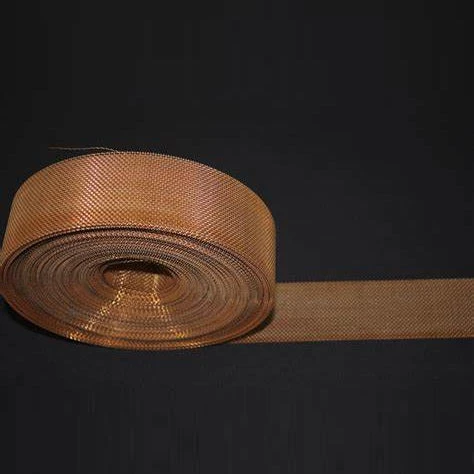
Red copper wire mesh — sometimes called copper wire mesh — is a precision-woven screen produced from pure copper wire in grades T1, T2 and T3. Its characteristic purple-red colour reflects high copper purity, and the surface should be uniform and bright without discolouration, blackening or visible impurities. When you run a hand across a quality sheet the surface feels smooth and free of protrusions, depressions, sand holes, pores or burrs.
Unlike brass or phosphor-copper alloy screens, red copper wire mesh is made from essentially pure copper, which gives it the highest conductivity and thermal conductivity of the copper mesh family while retaining good corrosion resistance in atmospheric, fresh-water and sea-water environments.
Key Specification Parameters to Evaluate Before Buying
Understanding three interdependent parameters will let you match a red copper wire mesh to your operating requirements with confidence.
1. Mesh Count (Opening Size)
Mesh count describes the number of wires per linear inch; a higher mesh count means smaller openings.
- Available range: 2 mesh to 200 mesh
- Coarser meshes (2–30 mesh): larger openings, suited to rough screening, architectural panels and grounding systems where airflow or visual transparency matters more than fine particle retention.
- Medium meshes (30–100 mesh): balance between open area and filtration precision; common in chemical filtration and catalyst support.
- Fine meshes (100–200 mesh): very small openings for high-precision screening, laboratory filtration and shielding applications where weave tightness contributes to electromagnetic attenuation.
Because opening size is derived from both mesh count and wire diameter, always specify both together when ordering.
2. Wire Diameter
Wire diameter determines the mechanical strength of the cloth, the proportion of open area and the weight per unit area.
- Available range: 0.08 mm to 0.8 mm
- Thinner wire (0.08–0.15 mm) allows a higher open area at a given mesh count, reducing flow resistance in filtration applications.
- Thicker wire (0.4–0.8 mm) increases tensile strength and durability, which matters when the mesh must resist mechanical stress, vibration or repeated cleaning cycles.
- For electromagnetic shielding, wire diameter interacts with mesh count to determine shielding effectiveness; this requires application-specific calculation rather than a general rule.
The confirmed product specification states a mesh error for a given opening can be controlled within ±0.02 mm, reflecting the precision weaving used.
3. Weave Pattern
Two standard weave patterns are available:
| Weave | Characteristics | Typical Uses |
|---|---|---|
| Plain weave | Each wire passes alternately over and under crossing wires; maximum interlock, highest rigidity per wire count | General filtration, shielding, architectural grounding |
| Twill weave | Each wire passes over two and under two; allows finer openings for a given wire diameter and higher mesh counts | High-mesh precision filtration, fine chemical screening |
Roll and Sheet Dimensions
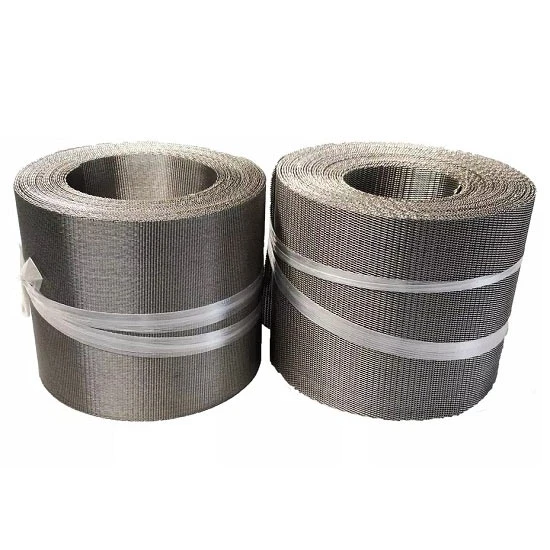
Standard roll widths are 1 m to 1.5 m, and standard roll lengths are 30 m. Non-standard widths and lengths can be produced to order. Confirm the exact cut size or roll quantity required when contacting your wire mesh supplier to avoid material waste.
Material Properties That Drive Application Selection
The following confirmed properties of red copper wire mesh directly influence which applications it fits:
High electrical and thermal conductivity: Copper's inherent conductivity makes copper mesh the preferred choice for grounding systems, cable shielding layers and heat-dissipation components in electronic assemblies.
Corrosion resistance: Copper performs well in atmospheric, fresh-water and sea-water exposure. In chemical processing equipment — reaction vessels, pipelines and filtration housings — this resistance lets the mesh operate without rapid degradation.
Electromagnetic shielding: The woven copper structure attenuates electromagnetic waves, making this material applicable to shielding enclosures, cable outer braids and signal-sensitive housings.
Non-magnetic: Unlike steel meshes, red copper wire mesh does not interfere with magnetic instruments or sensitive measurement environments.
Flexibility and processability: The mesh can be bent, cut and formed into custom shapes, which supports fitment in irregular housings, curved architectural panels and non-standard filter cartridges.
Application Guide by Industry
Electronics and Electrical Engineering
- Cable and wire shielding layers — prevents electromagnetic interference and signal leakage.
- Heat-dissipation components — conducts heat away from electronic device surfaces.
Chemical Engineering
- Filter media and catalyst carriers in reaction vessels and pipelines. The corrosion resistance of pure copper is relevant where stainless steel is not compatible with the specific chemical media. Confirm chemical compatibility for your exact process fluid before specifying.
Architecture and Construction
- Lightning protection and grounding systems — high conductivity directs current safely to ground.
- Decorative panels, wall cladding and partitions — the uniform purple-red colour and metallic texture provide a distinctive aesthetic that brass or steel cannot replicate.
Aerospace
- Electronic equipment shielding enclosures and engine heat-dissipation components — where combined conductivity, thermal performance and electromagnetic shielding are required in a single material.
Laboratory and Metallurgical Use
- Filtration, support screens and experimental equipment components.
- Metal liquid filtration in metallurgical processes.
How Red Copper Wire Mesh Compares with Related Copper Mesh Types
Buyers sometimes evaluate red copper mesh alongside other copper-family screens. The table below summarises confirmed differences to aid selection:
| Parameter | Red Copper Wire Mesh | Phosphor Copper Wire Mesh | Brass Wire Mesh |
|---|---|---|---|
| Material | T1, T2, T3 (pure copper) | QSn6.5-0.1, QSn6.5-0.4 | H65, H80 |
| Mesh range | 2–200 mesh | 2–300 mesh | 2–200 mesh |
| Wire diameter range | 0.08–0.8 mm | 0.08–0.8 mm | 0.025–1.0 mm |
| Key strength | Highest conductivity, EM shielding | High strength, toughness, wear resistance | High strength, golden colour, low cost |
| Colour | Purple-red | Purple-red | Golden yellow |
| Non-magnetic | Yes | Yes | Yes |
If maximum electrical conductivity and electromagnetic shielding performance are your priority, red copper wire mesh is the appropriate choice. If mechanical strength and wear resistance matter more than pure conductivity, phosphor copper mesh extends the mesh range to 300 mesh and adds toughness. If cost-effectiveness and decorative golden colour are the deciding factors, brass wire mesh is worth considering.
Selection Checklist for Buyers
Before contacting a wire mesh supplier, confirm the following:
- Required mesh count — the number of wires per inch that your application demands (2–200 mesh for red copper).
- Wire diameter — balancing open area, mechanical strength and weight (0.08–0.8 mm range).
- Weave type — plain weave for general rigidity; twill weave for finer openings.
- Roll dimensions — required width (standard 1–1.5 m) and length (standard 30 m rolls); note if non-standard dimensions are needed.
- Chemical environment — confirm copper compatibility with the specific fluid or gas the mesh will contact.
- Electrical or shielding requirements — specify if the mesh is for grounding, cable shielding or EM enclosure, as this may influence mesh count selection.
- Dimensional tolerance — for precision applications, the confirmed mesh edge error can be controlled within ±0.02 mm; state your tolerance requirement explicitly.
About Anping County Ansheng Wire Meshes Product Co., Ltd.
Founded in 1996 and located in Anping County — widely known as the "Hometown of Wire Mesh" — Anping County Ansheng Wire Meshes Product Co., Ltd. specialises in the production and sale of metal wire mesh and filter equipment for the machinery, petrochemical, plastics, metallurgy, pharmaceutical and water treatment industries. The company integrates R&D, design, production, sales and service, and supplies customers across the United States, Brazil, Germany, Poland, Australia, New Zealand, Taiwan and other markets.
For specifications, dimensions or custom requirements related to red copper wire mesh, contact Anping County Ansheng Wire Meshes Product Co., Ltd. directly.
THE PEOPLE

About the author
THE COMPANY
Anping County Ansheng Wire Meshes Product Co., Ltd.
Anping County Ansheng Wire Meshes Product Co., Ltd. was founded in 1996 and is located in Anping County, which is known as the "Hometown of Wire Mesh". Our company is an enterprise specializing in the production and sale of various metal wire mesh and filter equipment. The products are widely used in machinery, petrochemical, plastic, metallurgy, pharmaceutical, water treatment and other industries. Our company has advanced production and testing equipment, strict scientific management and quality control.…
About Us ↗Visit company website ↗YOUR NEXT STEP
Bring your brief. Start a useful conversation.
Use case, specification, quantity and delivery window: make the next conversation specific.
Post time: Oct . 28, 2026 01:51